Dr. Sasha Hakman Featured in WebMD: What You Need to Know About DHEA and Fertility
What You Need to Know About DHEA Supplements and Fertility
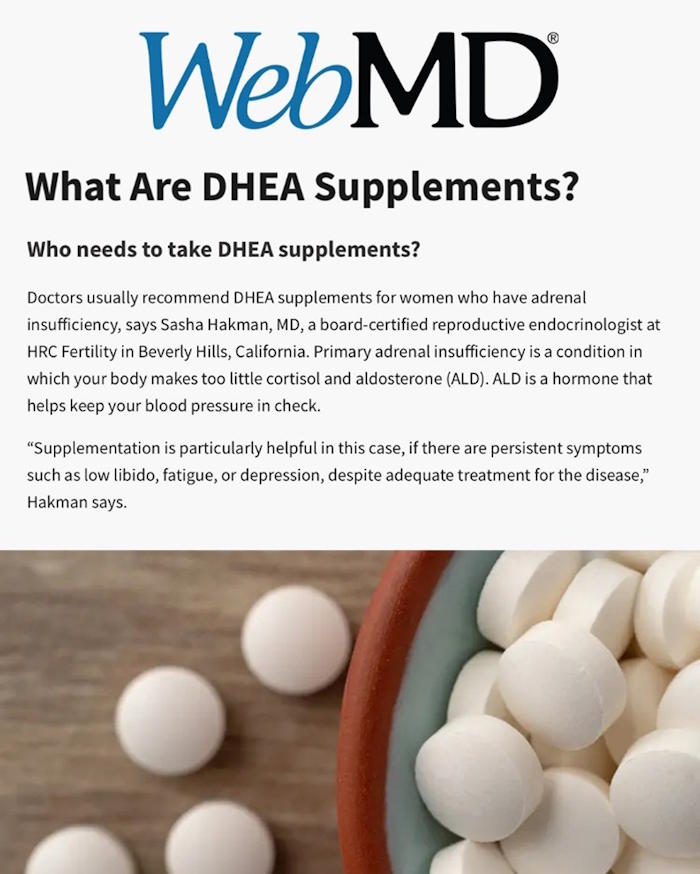
We’re thrilled to share that our very own Dr. Sasha Hakman, board-certified reproductive endocrinologist at HRC Fertility in Beverly Hills and West Los Angeles was recently featured in WebMD discussing DHEA supplements and their role in women’s health.
DHEA, or dehydroepiandrosterone, is a hormone your body makes naturally in the adrenal glands. It acts as a precursor to estrogen and testosterone, which means your body uses it to create these important reproductive hormones. Levels peak in your mid-20s and decline with age, which is why many people look to DHEA supplements for potential health and fertility benefits.
What Are DHEA Supplements?
DHEA supplements are man-made versions of the hormone and come in forms like tablets, capsules, creams, or powders. Some people take them for:
- Boosting energy and sex drive
- Supporting adrenal health
- Fighting signs of aging
- Building muscle and bone strength
- Improving mood and memory
What Does the Science Say?
While DHEA is marketed with many claims, research shows mixed results:
- Fertility & Adrenal Health: Dr. Hakman explains that DHEA may be helpful for women with adrenal insufficiency who still experience low libido, fatigue, or depression despite treatment. In these cases, supplementation can sometimes improve symptoms.
- Anti-aging & Athletic Performance: Studies show little consistent evidence that DHEA slows aging, boosts metabolism, or improves muscle strength.
- Risks: DHEA can raise testosterone and estrogen, which may cause acne, hair loss, high blood pressure, or hormone imbalances. Long-term use may even increase the risk of certain cancers, including breast and ovarian cancer.
Because supplements aren’t FDA-regulated, quality and safety can vary. This is why it’s so important to discuss DHEA use with a qualified physician.
Should You Take DHEA for Fertility?
While some fertility patients hear about DHEA as a possible way to improve egg quality or ovarian function, it’s not right for everyone. The decision to use DHEA should always be guided by a fertility specialist who understands your unique hormone levels, health history, and reproductive goals.
As Dr. Hakman emphasizes, “Supplementation is particularly helpful in specific cases like adrenal insufficiency — but it’s not a one-size-fits-all solution.”
The Bottom Line
DHEA is a naturally produced hormone with many claims surrounding its benefits. But science shows that while it may help in certain medical situations, it also carries risks. If you’re considering DHEA supplements for fertility or overall health, the safest step is to consult a specialist first.
At HRC Fertility, Dr. Sasha Hakman and our team are here to guide you with evidence-based recommendations so you can feel confident in your fertility journey.
Read Dr. Hakman’s full feature on WebMD
Ready to explore your options?
Schedule a consultation with Dr. Hakman today at our Beverly Hills fertility clinic or West Los Angeles fertility clinic today and get expert guidance on your personalized path to parenthood.